The Nation's Capitol provides facts, figures and torrential downpour
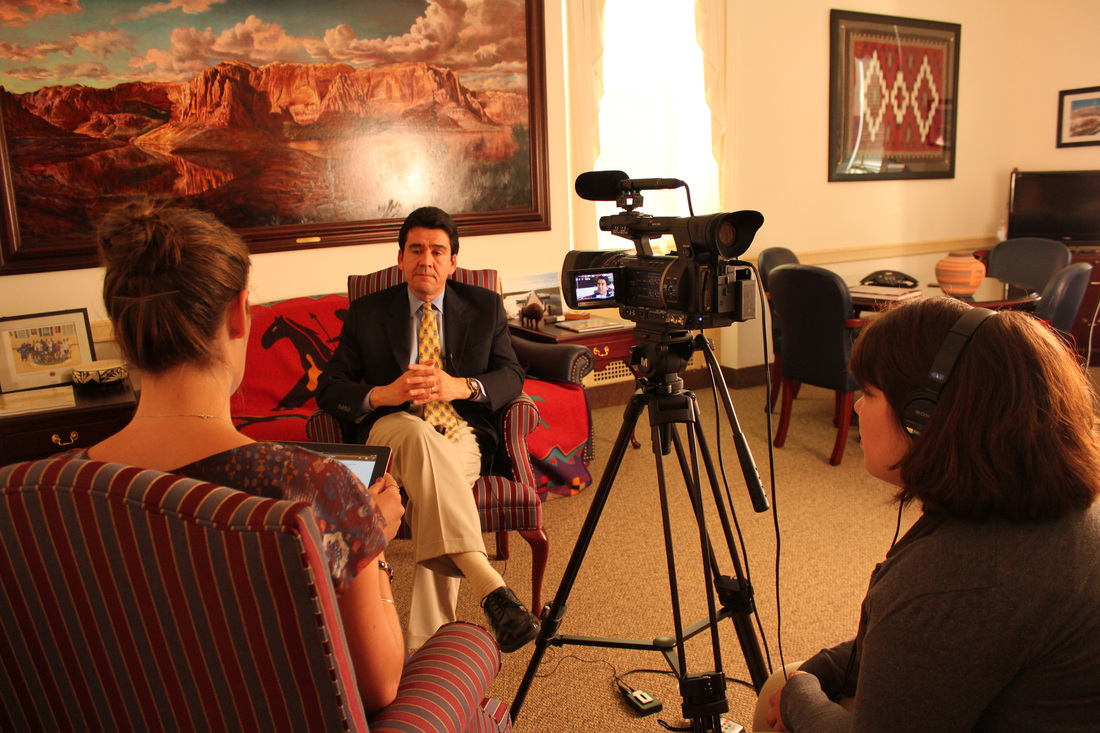
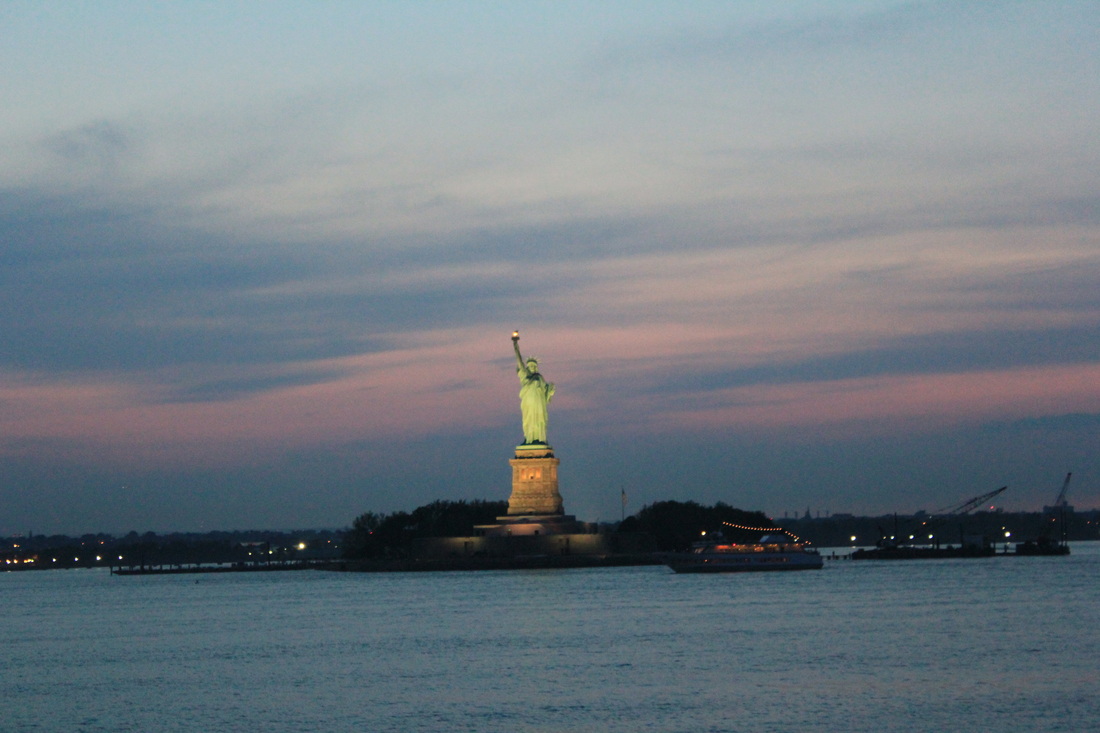
By Kortney Scroger Arlington, Va., June 7, 2013 – Upon descent from cruising altitude, our nation’s Capitol came into view; monuments and buildings only previously seen in photos by several of the researchers came closer and closer to reality. The Tapped Out team, worn and hungry, left the Reagan National Airport with their plethora of luggage they have begrudgingly been carrying across the country to navigate the historic city that is Washington, D.C. After unpacking and preparing for the next busy day of interviews, it was time for the team to hit the hay. But not before taking a few quick seconds to enjoy their surroundings: from the deep purple door to the dark wood floors and intricate detailing, their Old-Town Alexandria residence surely provided a true colonial experience. The morning of June 6th started at 6:30 am for the team, who then made a necessary pit stop at the closest Starbucks before venturing to their first interview of the day at the International Bottled Water Association (IBWA). They met with Joseph Doss, president and CEO of the IBWA. This interview was an eye opening one, as Doss broke down many of the common misconceptions in regards to bottled water in terms of health, safety, and sustainability. More specifically, Doss talked about the positive and negative impacts of the industry on the health of humans and the health of the environment. Some facts that Doss shared with the team were that the recycling rate for plastic water bottles is 39 percent, and is on the rise with the IBWA’s work to increase curbside recycling. And interestingly, out of all the water in the United States, bottled water only accounts for .02 percent. After shaking hands and exchanging farewells, the Tapped Out team split into teams of two to cover more ground. One team went to meet with Nancy Stoner, Deputy Assistant Administrator for Water at the Environmental Protection Agency (EPA), while the other team met with Chris Williams who is the Senior Vice President of conservation at American Rivers. The intention for both interviews was to get a general idea of how water in the United States is regulated (EPA) and how water systems work and their importance (American Rivers). The teams then reconvened for one last interview. This interview was held inside the Department of the Interior with Michael Connor, the Commissioner of the Bureau of Reclamation. This interview was a little tougher for the team to get to, however. Armed with large bags full of cameras, oddly-shaped lights, and audio kits, the team was subject to much scrutiny by the security officers guarding the building. After enduring what seemed like airport security and thorough equipment inspections, the team was permitted to haul their 75-plus pounds of equipment to the elevator and down the hallway that felt like it would never end. But the team finally reached their destination, the Commissioner’s office. It was beautifully decorated with historical artwork and furnishings, making the process of setting up the interview frame quick and easy. To boot, the interview with Commissioner Connor was a complete success. From the importance of water management both locally and globally, to the development of infrastructure and maintenance, Commissioner Conner covered the entire scope of services the Bureau of Reclamation provides to ensure a reliable water supply to all communities. After a full day of interviews, the tired crew packed the rental minivan, lovingly nicknamed the “Starship Enterprise,” and drove back to Virginia to the temporary homestead to freshen up before dinner and some monument hopping. Unfortunately, the Washington, D.C. weather had other plans, and the closer we got to the city the heavier the rain fell. So instead of getting drenched, the team enjoyed a driving tour of the city, crossing their fingers for clearer weather to come. By Haley Huntington
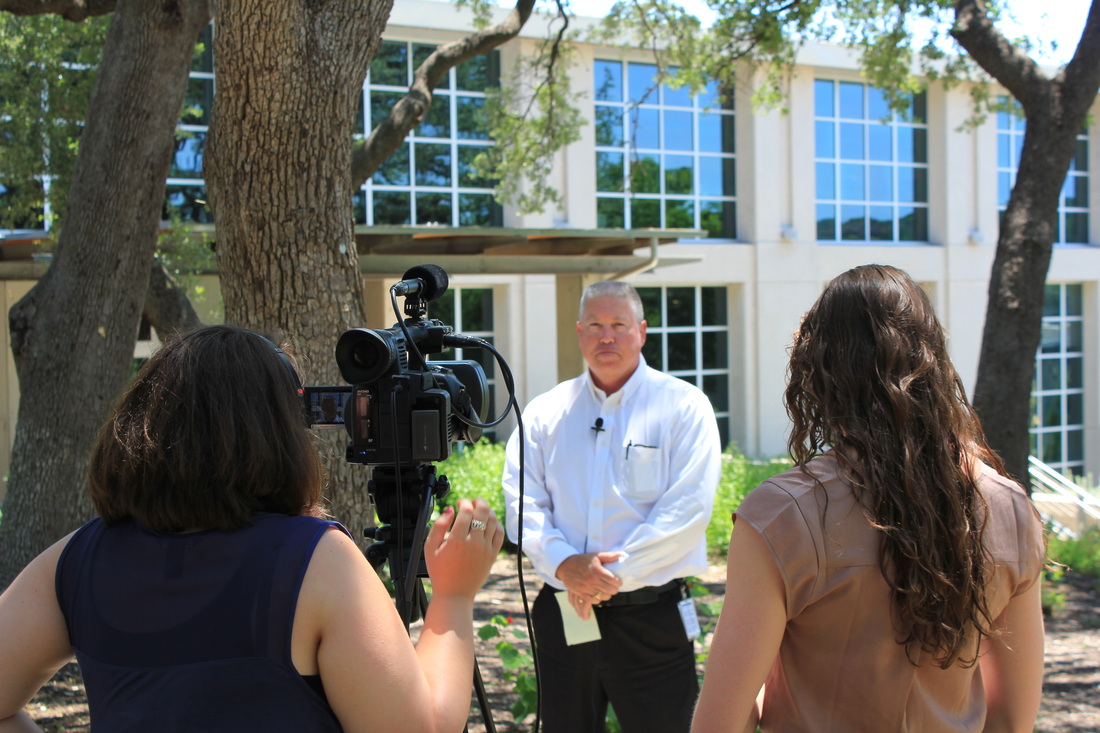
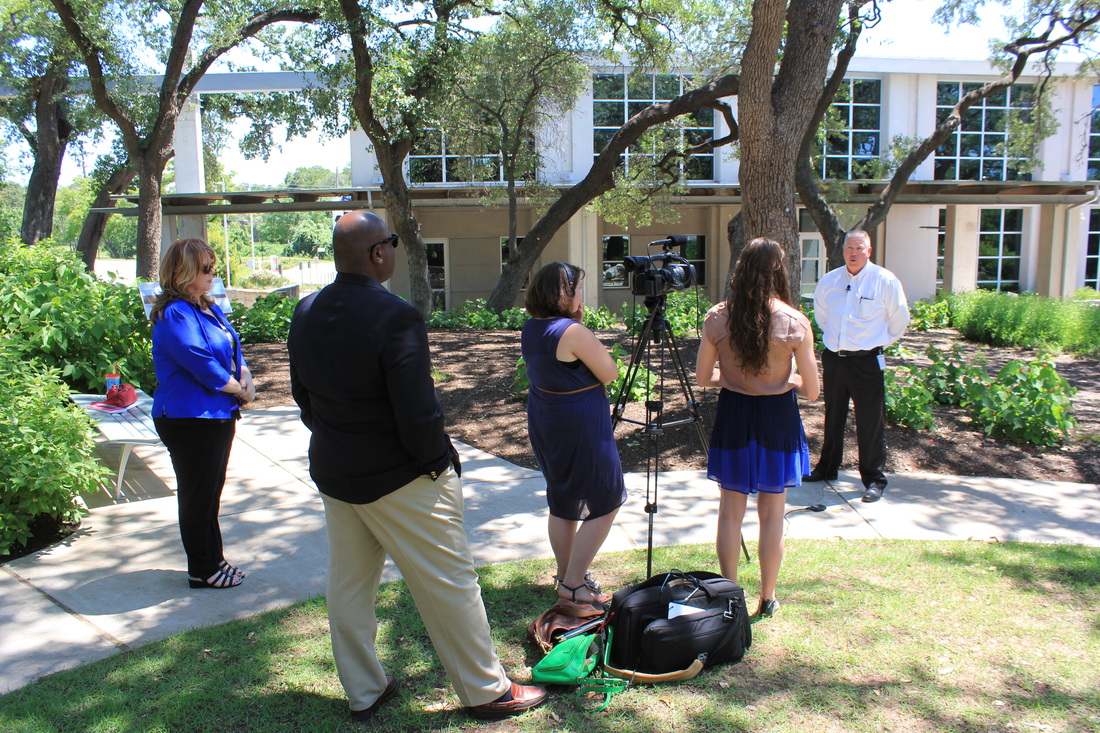
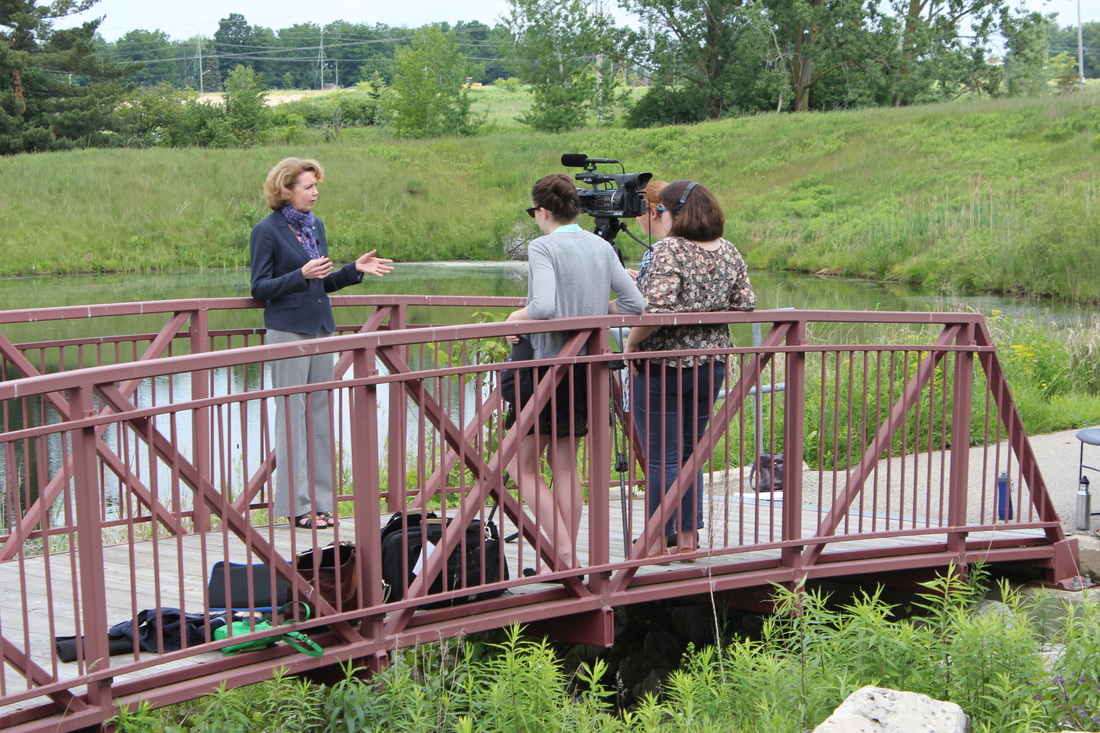
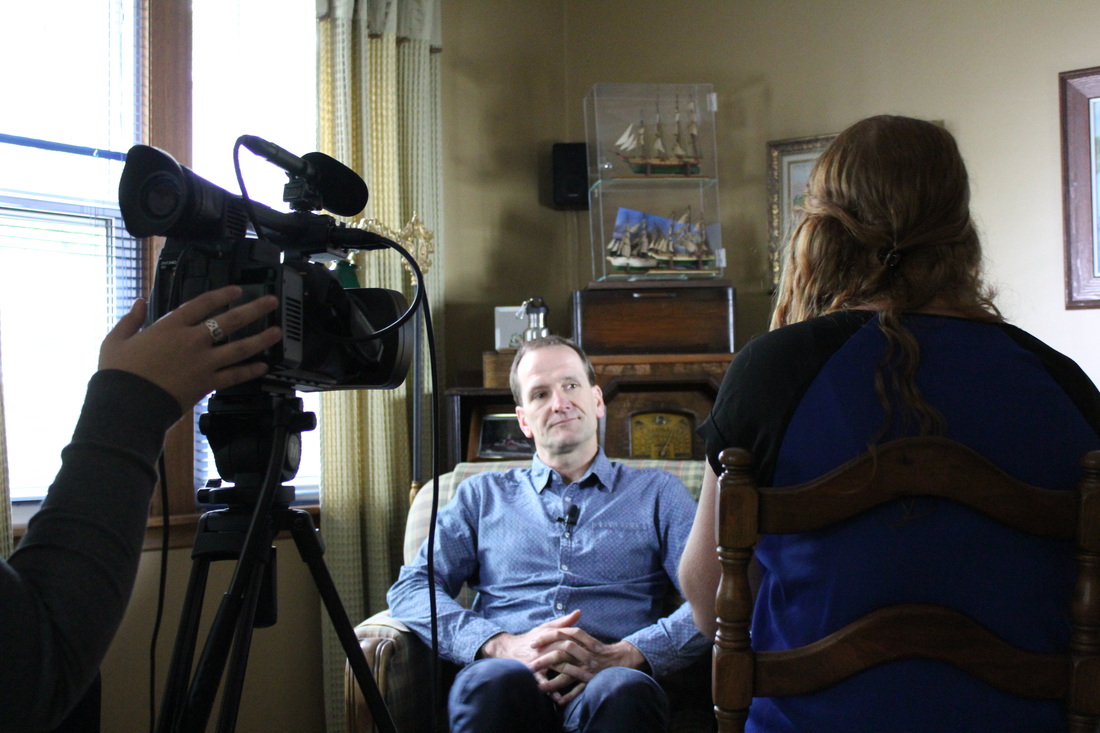
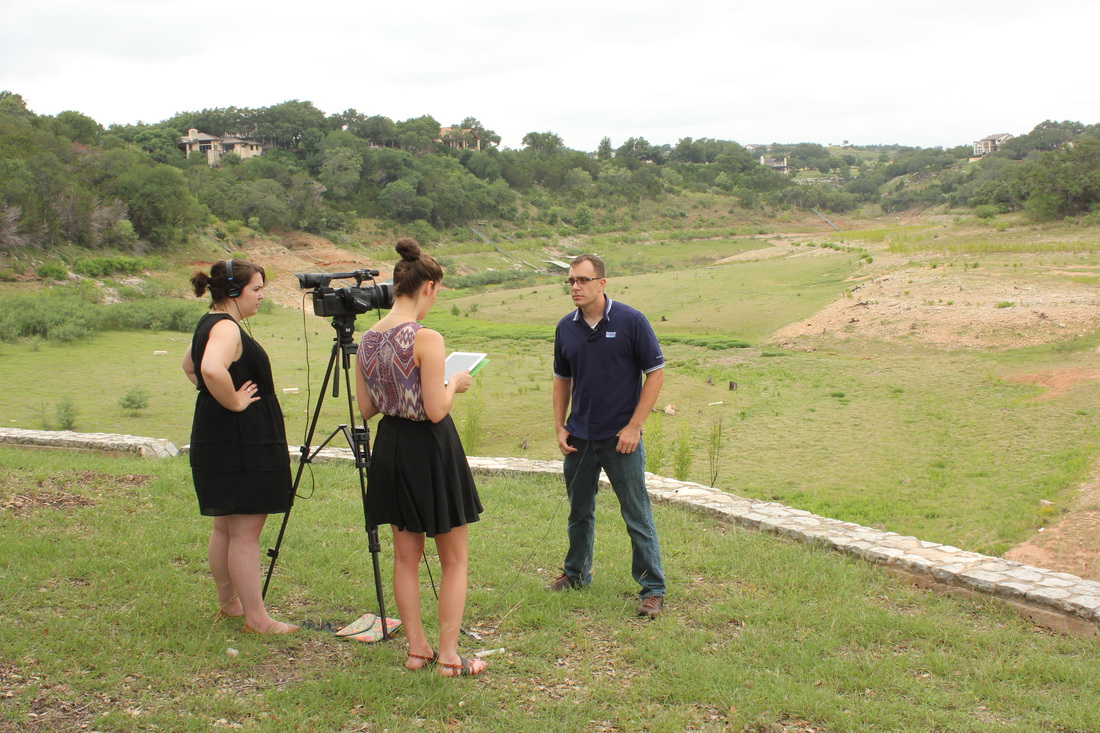
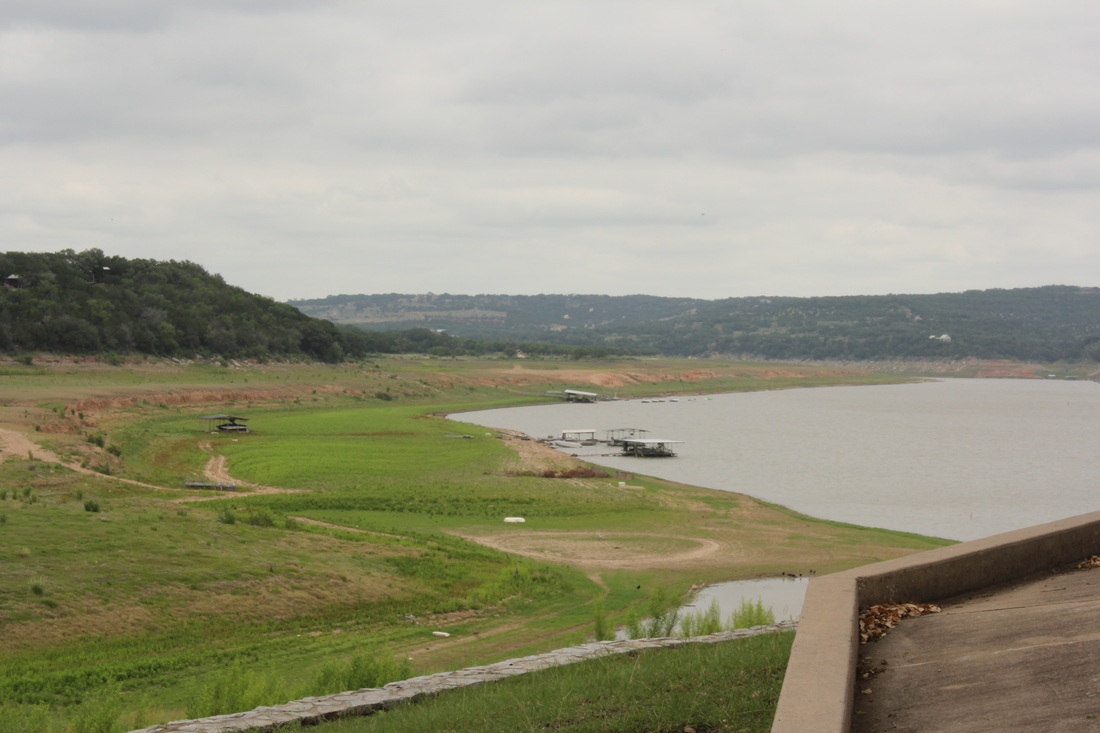
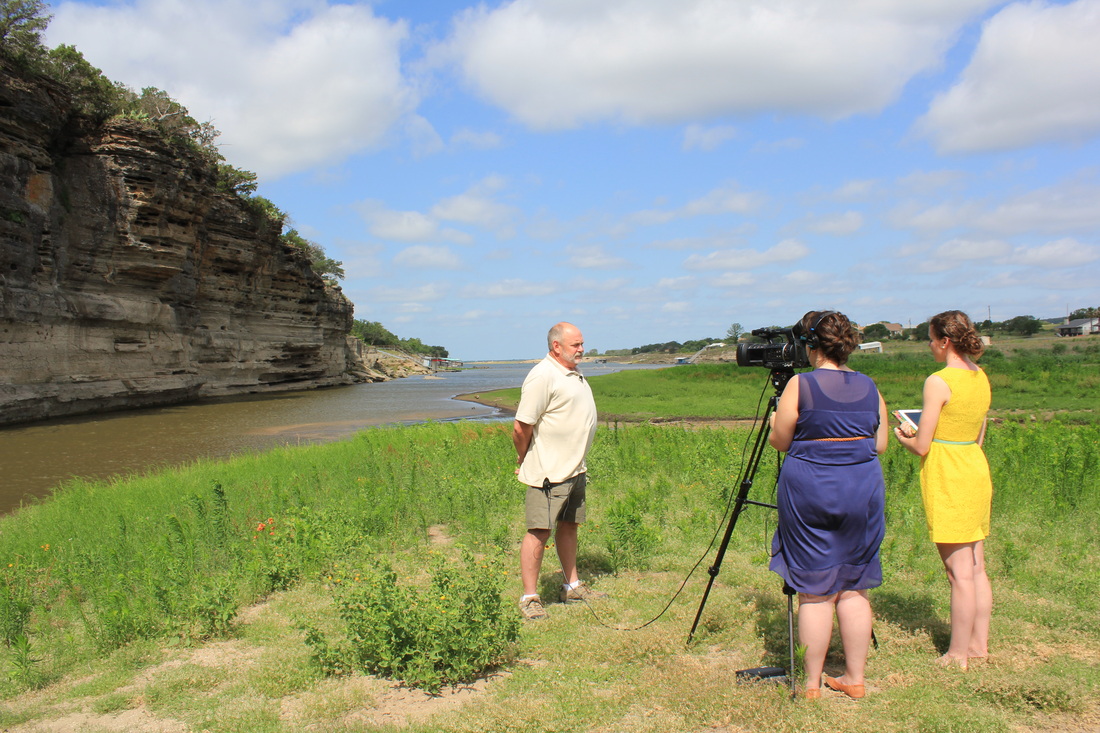
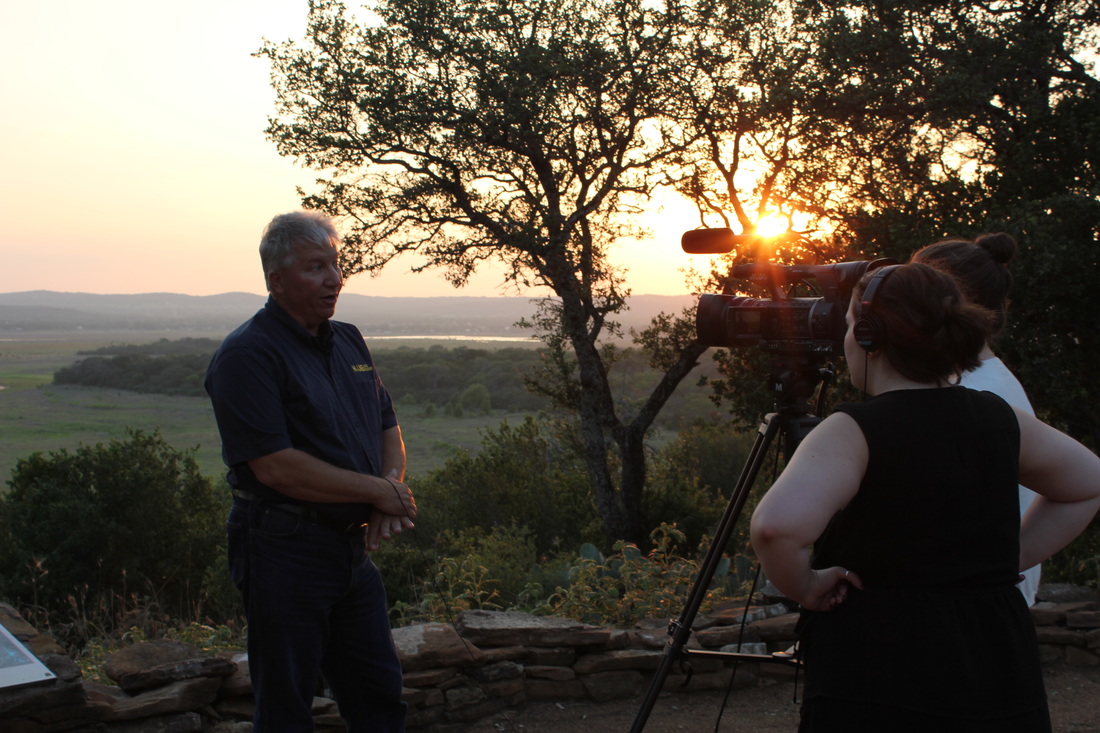
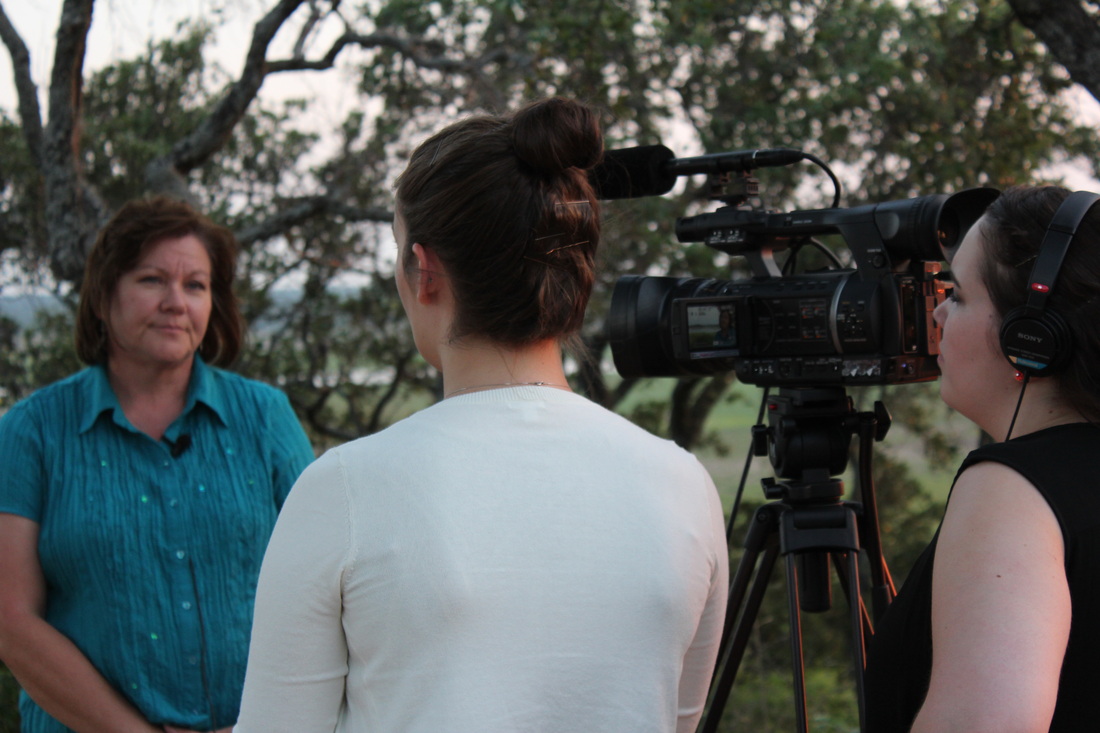
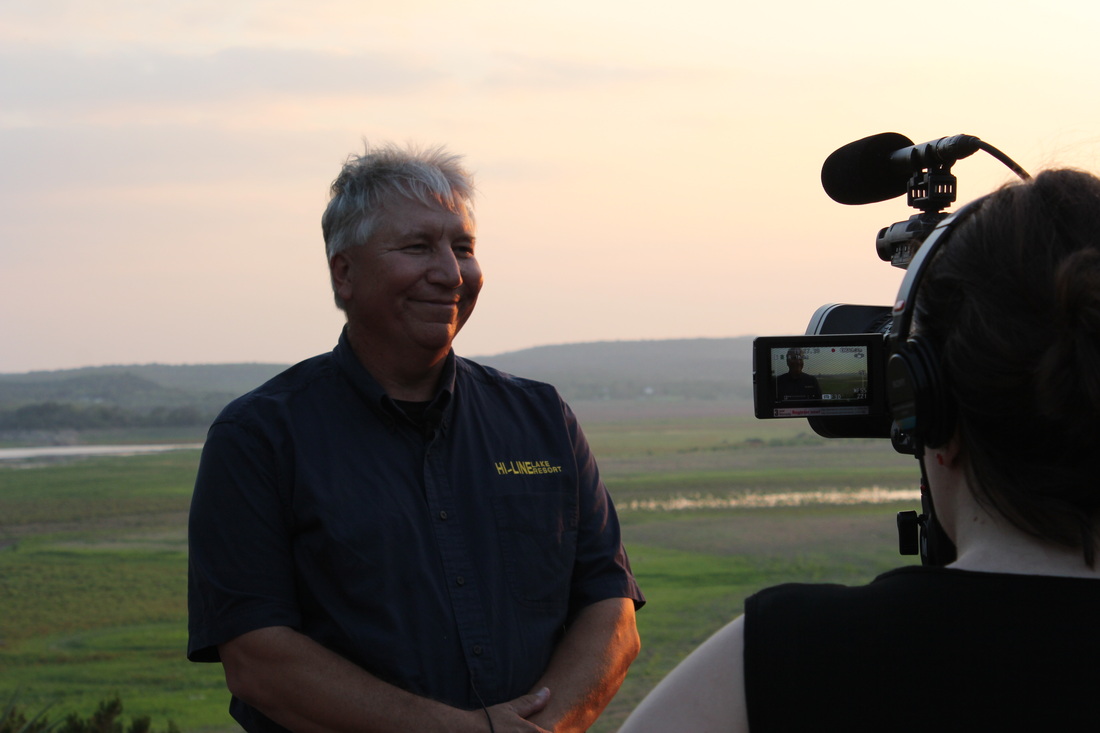
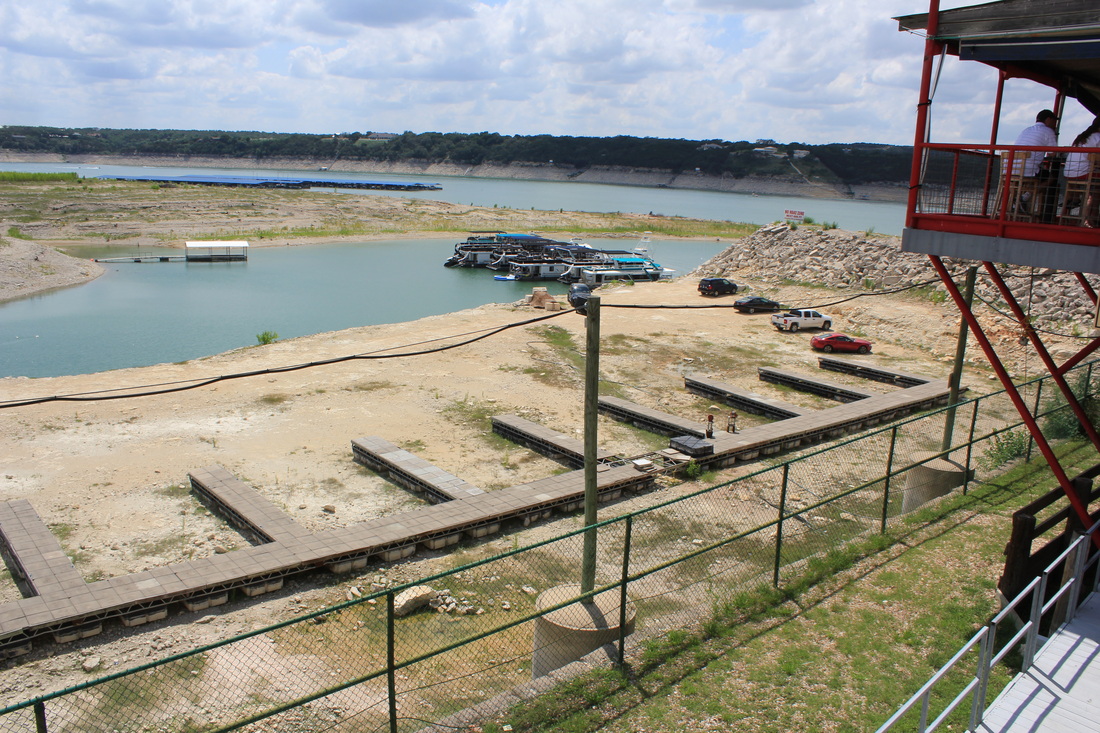
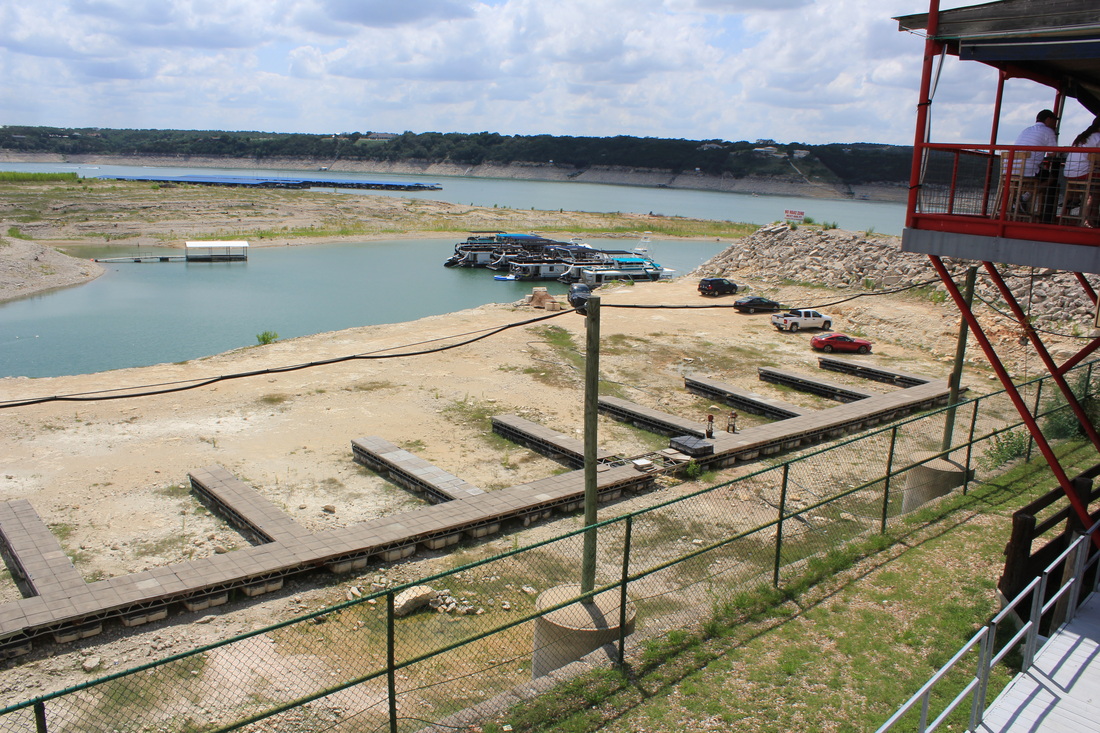
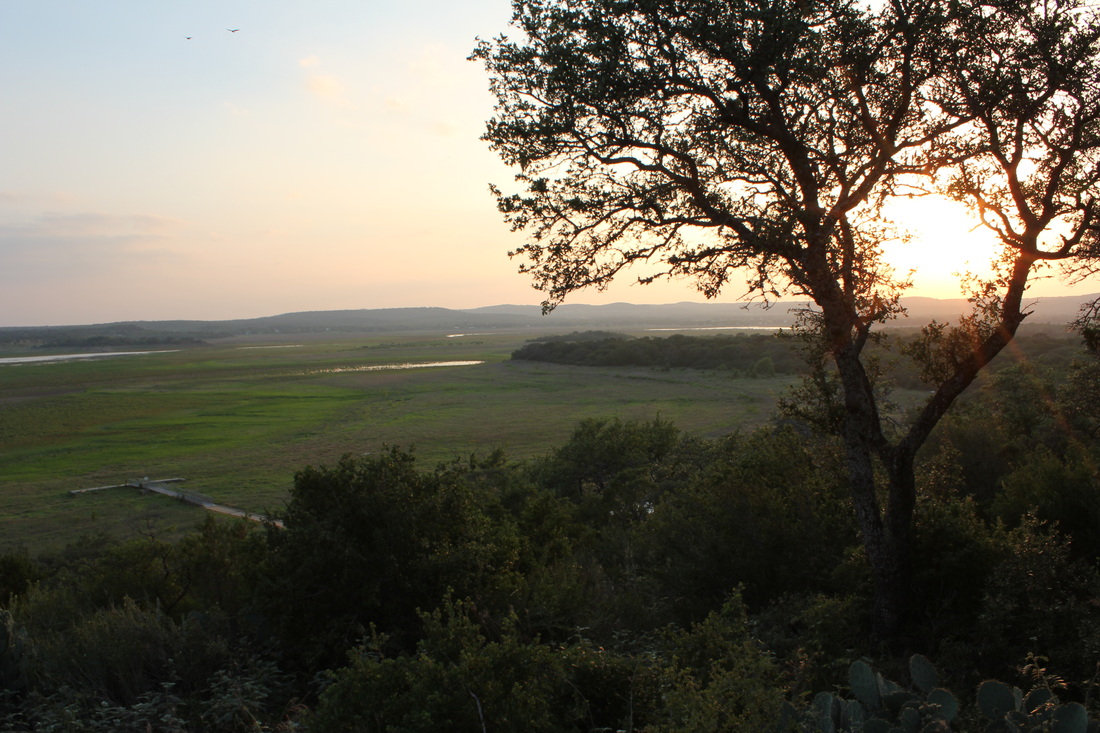
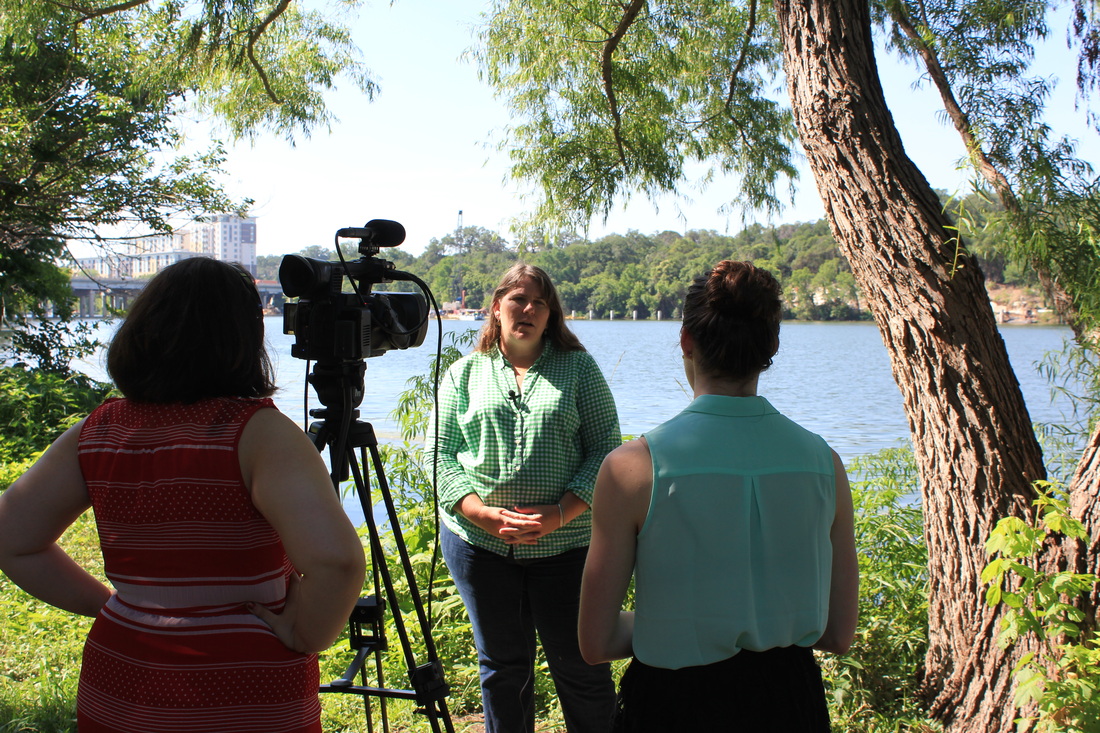
Austin, Tx., June 5, 2013 – With a loaded itinerary and an eager tour guide by the name of Dr. Kevin Klein, the Tapped Out team set out for the Highland Lakes, which currently look like puddles connected by small trickling creeks in many areas. Shocking is the best way to describe the first location Dr. Klein brought the team. All that was visible was the stark reality of an empty crater, boats scattered and abandoned on the floor of the once-full Lake Travis. Homes that were once lake-front properties had nothing to look at but a scary reminder that Texas is in a severe drought, and has been for several years. Dr. Jordan Furnans, Senior Water Resources Engineer with a company called Intera, was the first to explain to the team how difficult it is to provide an adequate water supply for individuals living in Texas, one of the fastest growing statewide populations in the country. Seeing as Texas is in a severe drought, part of Dr. Furnans’s job is to make critical decisions regarding the change in access to the water during times of low supply, when people need water most. After enjoying some legendary Texas barbeque, it was off to the city of Spicewood, Tx., a community that has essentially run out of water and has to have its supply trucked in four times a day. Karen Bruett, a resident of Spicewood, explained what it is like living there since their aquifer went dry. Bruett and her husband moved to Spicewood years ago so that they could enjoy hobbies such as boating and fishing on beautiful Lake Travis. However, with the current drought situation, Lake Travis has been so low that Bruett’s boat has been parked in the driveway for over a year. The lack of water is not only impacting recreation in Spicewood, but the daily lives of its residents as well. According to Bruett, the town is under stage four water restrictions, meaning that all outside uses for water are prohibited, and inside use must be greatly reduced. “We don’t shower every day,” said Bruett, “and we only flush when necessary, so I'll let you figure that one out.” The restrictions are serious, and residents must pay a considerable fine if their water usage exceeds the allowable amount. This is the stark reality that Spicewood residents are facing, and sadly, it is becoming the new normal for many. As the team continued on their journey through the Highland Lakes, it was clear that Bruett was not alone in hardships caused by lack of water; many other residents and business owners located on the lakes have been severely impacted by the ongoing drought. The Highland Lakes normally draw in a huge amount of recreation, and many have built their livelihood around the business of recreation on the lakes. But persistent conditions have forced many local business owners to watch their customer base dry up along with the water. Some have even been forced into bankruptcy, seeing their life savings wash away due to something that they cannot control: whether or not it will rain. John Williams, owner of Thunderbird Resort on Lake Buchanan, remains optimistic and proactive with regards to the health of his business by altering the way it operates to be more independent from the lake and its inconsistent levels. However, he still finds himself lying awake at night, concerned about the future of the Highland Lakes and our water supplies as a whole. As the team listened to Williams’ testimony, they couldn’t help but marvel at the situation and their surroundings. Had the lake been at its normal capacity, waterproof camera equipment and scuba suits would have been necessary because they would have been standing 30 feet under water; instead, the team found themselves standing on dry land, at least five feet above the current water line. Not only were these circumstances tear-jerking, they were also frustrating. After a long conversation over dinner with the President of the Central Texas Water Coalition, Jo Karr Tedder, it seemed that there was certainly more to Texas’s story than the drought. Contentions have been made that drought conditions have been aggravated by mismanagement of the water by the governing body for water allocation in Texas: the Lower Colorado River Authority (LCRA). Lakes Buchanan and Travis, part of the Highland Lakes system, are reservoirs that help supply water for municipal, agricultural, and industrial uses in nearby cities and throughout the basin. In 2011, the LCRA released nearly 500,000 acre feet of water from the Highland Lakes, much of which was used by rice farmers in the southern part of the Texas. The LCRA took this action with the presumption that rains would come and replenish the water in the lakes. This was not the case, however; a major drought hit shortly after the release, and thus the Highland Lakes are currently only at about 39 percent of their normal capacity. As surrounding communities have seen hardly any relief to the lakes since the 2011 release, either naturally or by actions of the LCRA, many of the citizens who live and depend on that water are extremely upset. With the desire to hear both sides of this dispute, the Tapped Out team set out to meet with LCRA’s General Manager of Water Operations, Ryan Rowney, on their last day in Austin. When asked about the large release of water from the Highland Lakes in 2011 and the resulting consequences, Rowney stated that the organization had not accounted for the possibility of a prolonged drought, because they can usually count on heavy rains or floods to fill the lakes. The current drought has been going on for about three years, and is predicted to last another eight to 10 years – a scary thought, considering the already staggeringly low lake levels. Praying for rain, as many Texans have admitted to doing, may not be enough in this case. The Tapped Out researchers then left Texas with hopes of finding cooler weather, but equally exciting stories in their next stop: the nation’s capital, Washington D.C. The pictures featured in the gallery below were taken by members of the Tapped Out team as they made their way from Colorado to Texas. . By Haley Huntington Denver, Co., May 31, 2013 – After minimal sleep and a 6 AM flight, The Tapped Out team touched down in the mile high city on Tuesday morning, ready to hit the ground running. Heading north from Denver to Greeley, Co., the team met with Jon Monson, Water and Sewer Director for the city. Monson gave an incredibly informative interview, teaching us about Colorado’s unique water delivery and allocation systems. “Water flows uphill towards money,” explained Monson. In Colorado, water allocation decisions are governed by the Prior Appropriation Doctrine, which dictates water rights for users in the state (and other surrounding “Basin States”). The Doctrine essentially states that the first person to put water to beneficial use is granted the right to use it. Roughly 85 percent of the city’s water goes toward agricultural use. However, it trickles slowly toward the cities and municipal needs during drier years when there is less water to go around and reservoirs have been depleted. As city and state populations continue to increase, so will the need for the scarce and valuable resource that is water. “People won’t stop moving here unless we put a gate up, and that’s not going to happen,” said Monson. Increasing demand for water, both for municipal and agricultural use, has led to some positive initiatives, though. The City of Greeley is hard at work to educate its residents on smarter water use practices, as well as providing incentives for those following that advice. According to Monson, educating children is the best way to do this. By educating our youth, they can act as a force of change upon their parents, as well as teach their own children later in life. Upon conclusion of Monson’s interview, the team packed back into the minivan to drive to their next destination: the home of a fourth generation family farmer by the name of Kent Peppler. After a warm welcome to the city of Meade, Co., Peppler taught the team all about the process through which he gets the water he uses on his crops (barley used to brew Coors beer, for example). He also elaborated on how irrigation systems operate, as well as how water’s role in agriculture has evolved throughout the years. “Whiskey is for drinking and water is for fighting,” Peppler said. The team learned quickly that this is a term frequently used by Coloradans. According to Peppler, farmers need to band together to ensure that they are strategic in how they use and store water because there is only so much to go around, and there are a lot of other beneficial uses fighting for the right to water. After a busy first day and some much needed sleep, the team started off the next day at Northern Water and met with Public Information Officer, Brian Werner, to gain insight on the historical role water played in the development of the American West. From the placement of preliminary settlements near accessible water sources, to water’s role in spurring social progress and the industrial age, Werner served as a walking encyclopedia in terms of educating the team on a multitude of water issues. Werner also informed us of some of the impressive projects that Northern Water is employing not only to provide water to thousands of Colorado residents, but also educating Coloradans about how easy it is to conserve water in daily life. “Water is a fairly cheap resource,” said Werner, “but I hope we don’t have to get to that point,” he continued, referencing the increasing cost of gasoline and speculations about increasing the price of water in order to make people more cognizant of their consumption. “We can live without gasoline. But we can’t live without water,” remarked Werner. In attempts to keep the cost of water low and make the most of the precious natural resource, Northern Water utilizes some pretty impressive visual tools to show Coloradans that using less water is much easier than it seems. According to Werner, about half of the water homeowners use goes to outdoor uses, whether it be for washing cars or landscaping upkeep. So logically, one of the easiest ways to conserve water is to change and minimize the way it is used outside. Northern Water’s backyard serves as a textbook example of the practice of xeriscaping, meaning landscaping that uses little to no water for upkeep. The various plots and experiments that are showcased are great learning tools for homeowners and landscapers, educating them on which plants can survive on minimal water supply and still look beautiful in the semi-arid region. Side-by-side plots of grass represent lawns watered with the amount of water that the average homeowner uses, compared to a plot watered with 30 percent of that supply. Not surprisingly, the grass does just fine with less water. In a short three days, the state with 300 days of sunshine annually taught the Tapped Out team many valuable lessons about water allocation and conservation. Just because water is plentiful at times, using it all at once is hardly a smart practice. In order to keep water coming out of our taps and onto our crops, conservation is key. 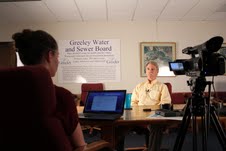 Haley Huntington (left) interviews Jon Monson (right) who is the Water and Sewer Director for the city of Greeley on May 28th 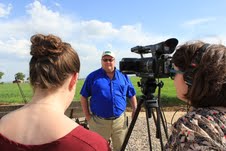 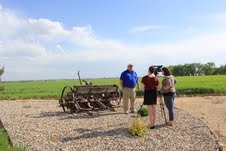 The Tapped Out team interviews Colorado fourth generation family farmer, Kent Peppler. May 28th 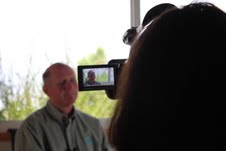 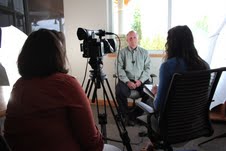 Interview with Brian Warner from Norther Water. May 29th By Kortney Scroger
NEW ORLEANS, Jan. 19, 2013 – The Water Team had a day full of interviews last Friday, all of which centered primarily on the issues of wetlands and wetland loss in Louisiana. According to local scientists and researchers who study these matters, a combination of factors, including population growth and reduced sediment deposits that have historically come from upriver are causing rapid loss of wetlands in Southern Louisiana. Wetlands are important to the environment because they help cleanse water, and they provide habitat to important animals and organisms in the food chain. These discussions got us to thinking about what visuals we would need in the film to illustrate these points. The answer to that question unexpectedly presented itself as we were driving back to New Orleans from one of our meetings outside the city. As darkness fell, we spotted a roadside sign that read, "Airboat Tours by Arthur." Almost immediately, we decided that shooting video and stills from an airboat would be a good way to acquire imagery. We called from the car and made reservations for just before sunset the next evening. We arrived on Saturday a few minutes before our appointment time, not sure exactly what to expect. We walked into the office and the first thing that caught my eye was an 11-foot-long stuffed alligator. We were greeted by a friendly woman, who we would soon learn was Arthur's wife. She had us sign the obligatory release forms, took our money, and prepared us for our journey, which included warning us that her husband, Arthur Matherne (our tour guide), is very passionate about his job and can talk VERY fast when he gets excited. This is something we learned quickly. Soon thereafter, Arthur pulled up on his airboat. He welcomed us, and the team climbed aboard. Armed with our cameras, we began our journey. Arthur, who makes his living by running these bayou tours, began by gently guiding the boat through a canal -- lined by waterfront homes -- that leads to vast, open wetlands that stretched for miles in all directions. About five minutes into the ride, and with the residential neighborhood now well behind us, Arthur revved the boat’s motor and shouted, "Now would be the time to put on your ear muffs!" By which he meant large, plastic ear coverings like those worn at shooting ranges, or by ground control crews at airports. Next thing we know, we are speeding through the water at about 60 mph – so fast that it feels the ear muffs might fly off my head and the wind might yank the video camera out of my hands. Meanwhile, Arthur is making the boat do 360-degree turns in the water and simultaneously talking a mile a minute about the wildlife whizzing by, about the depth of the water in any given place, about the air temperature, and just about anything else that pops into his head. The craziest part of this excursion occurred about halfway through the tour. At the beginning, Arthur had casually mentioned that airboats could go just about anywhere. However, that brief allusion early on did not prepare me for what was about to happen. Still driving at a swift pace, Arthur turned the boat towards dry land! As chief videographer, I was seated in the very front of the boat. Arthur showed no signs of slowing down. So, I gripped the camera tightly and hoped for the best. The airboat jumped the bank, hopped up a fairly steep hill, spun around 180 degrees, and came to rest on dry land. Clearly proud of himself, Arthur hopped off the boat, and in his rapid-fire Cajun accent, again announced that “Dis here boat can go anywhere, anytime.” After recovering from the shock of having just “sailed” on dry land, the team and I stepped off long enough to catch our breath and have Arthur take a group photo of us. Then, it was back on board for the rest of tour. That airboat ride with Arthur is an experience I will never forget. It gave the team a unique and up-close perspective of the Louisiana wetlands, a beautiful and vital natural resource. We also had a few heart-stopping moments along the way and lots of laughs. Members of the Water Team finished the day with smiles on their faces, a memory card filled with footage of Southern Louisiana, and the unforgettable Cajun airboat pilot Arthur Matherne. | Tapped Out TeamFollow our journey ArchivesJune 2013 Categories |











 RSS Feed